


System and permissions
How to create a user group
Splitting the team into groups so channel and patient visibility can be managed at group level.
Where to find it
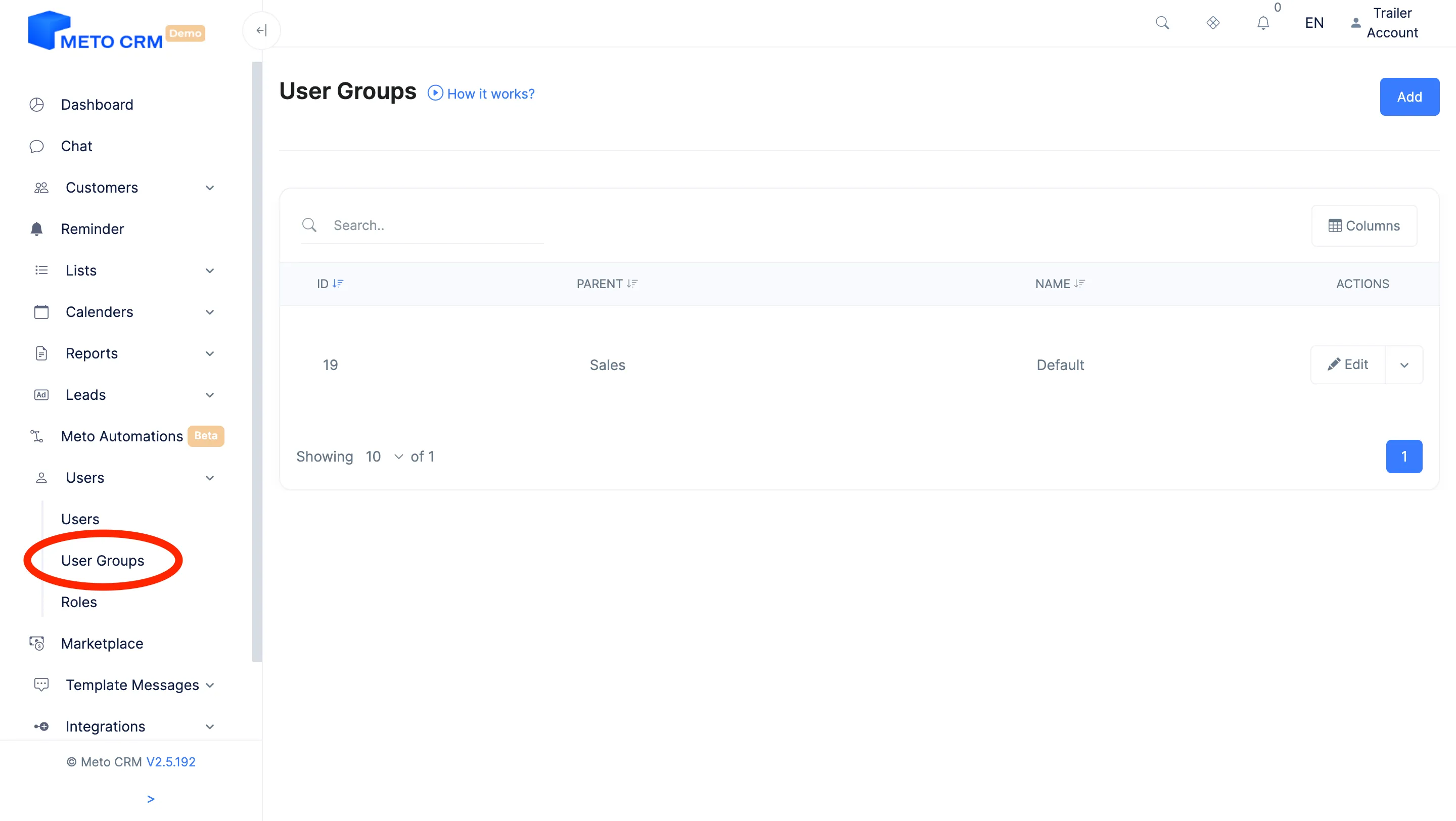
UsersUser Groups
User groups are the basic tool for splitting a team and managing visibility. The most common setup in medical tourism is by language: an English team, an Arabic team, a Russian team — each seeing their own patients and not each other's.
The point that matters: membership alone grants no visibility. A member sees only what is assigned to them; seeing the whole group requires the manager flag on that group row.
Before you start
- Group screens require the Admin role.
- Decide the logic before creating groups: language, treatment or branch.
Step by step
- Click the User Groups button under Users in the menu on the left.
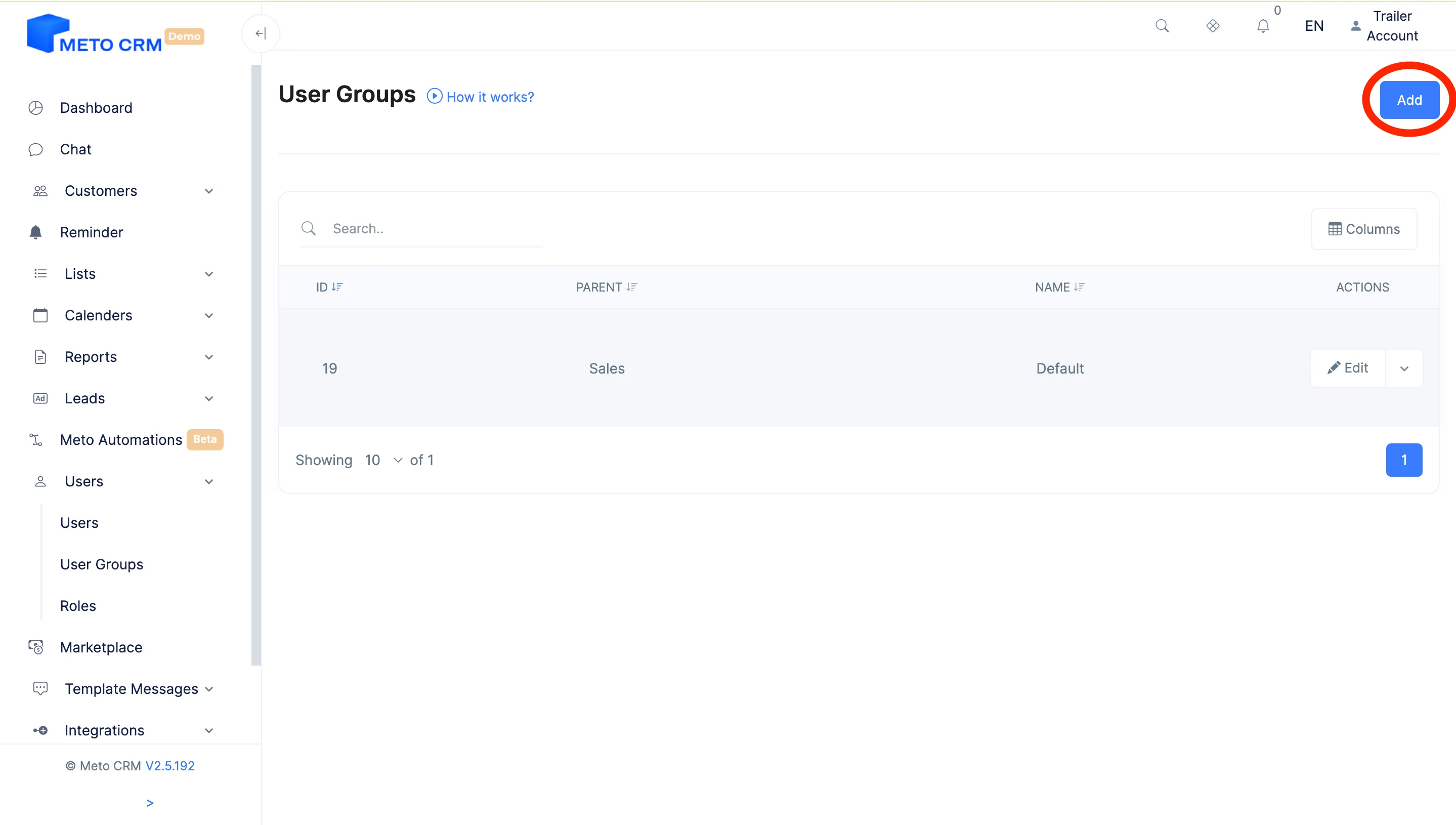
- On the page that opens, click the Add button at the top right.
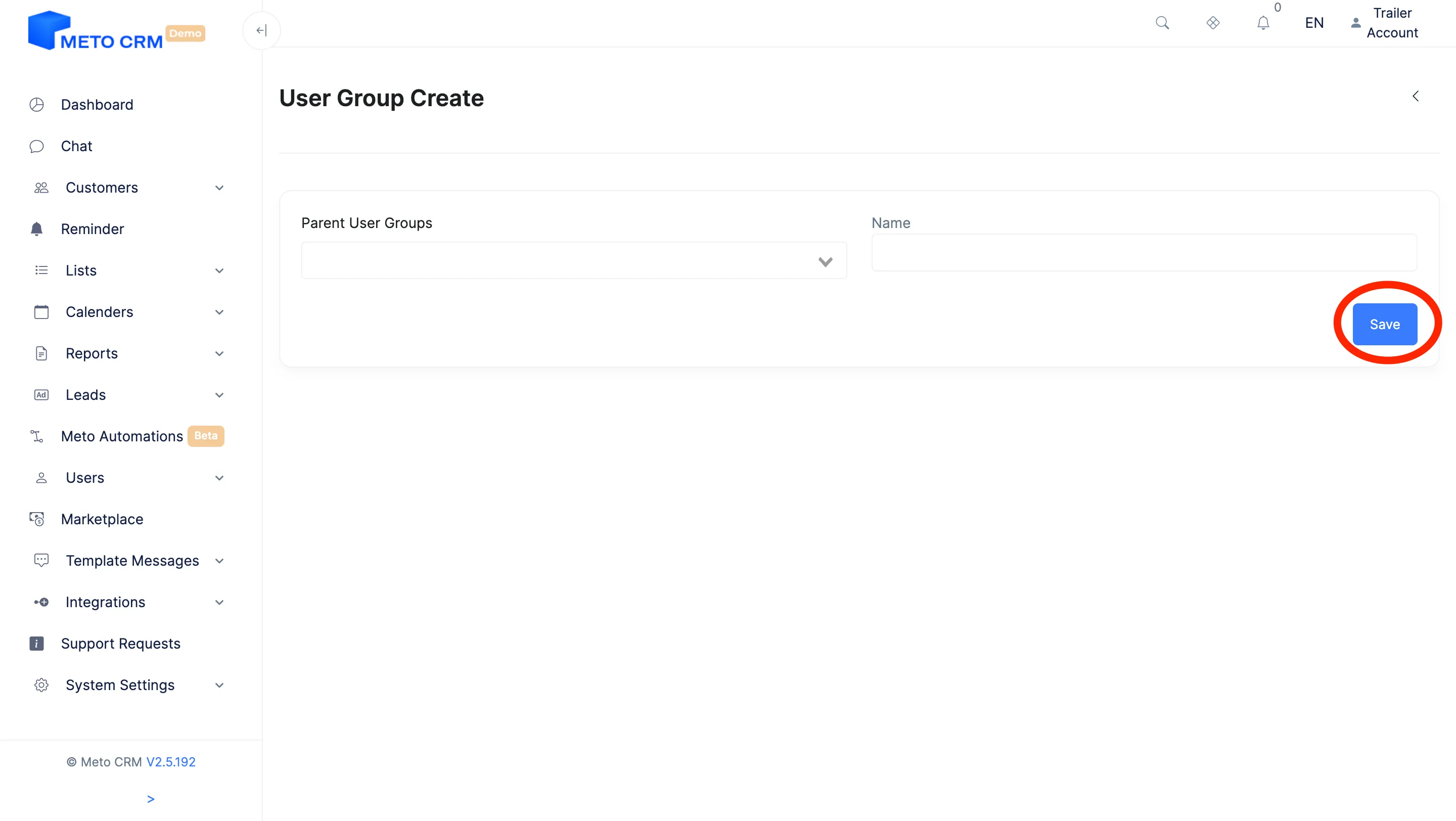
- After filling in the fields on the page that opens, click the Save button at the bottom right.
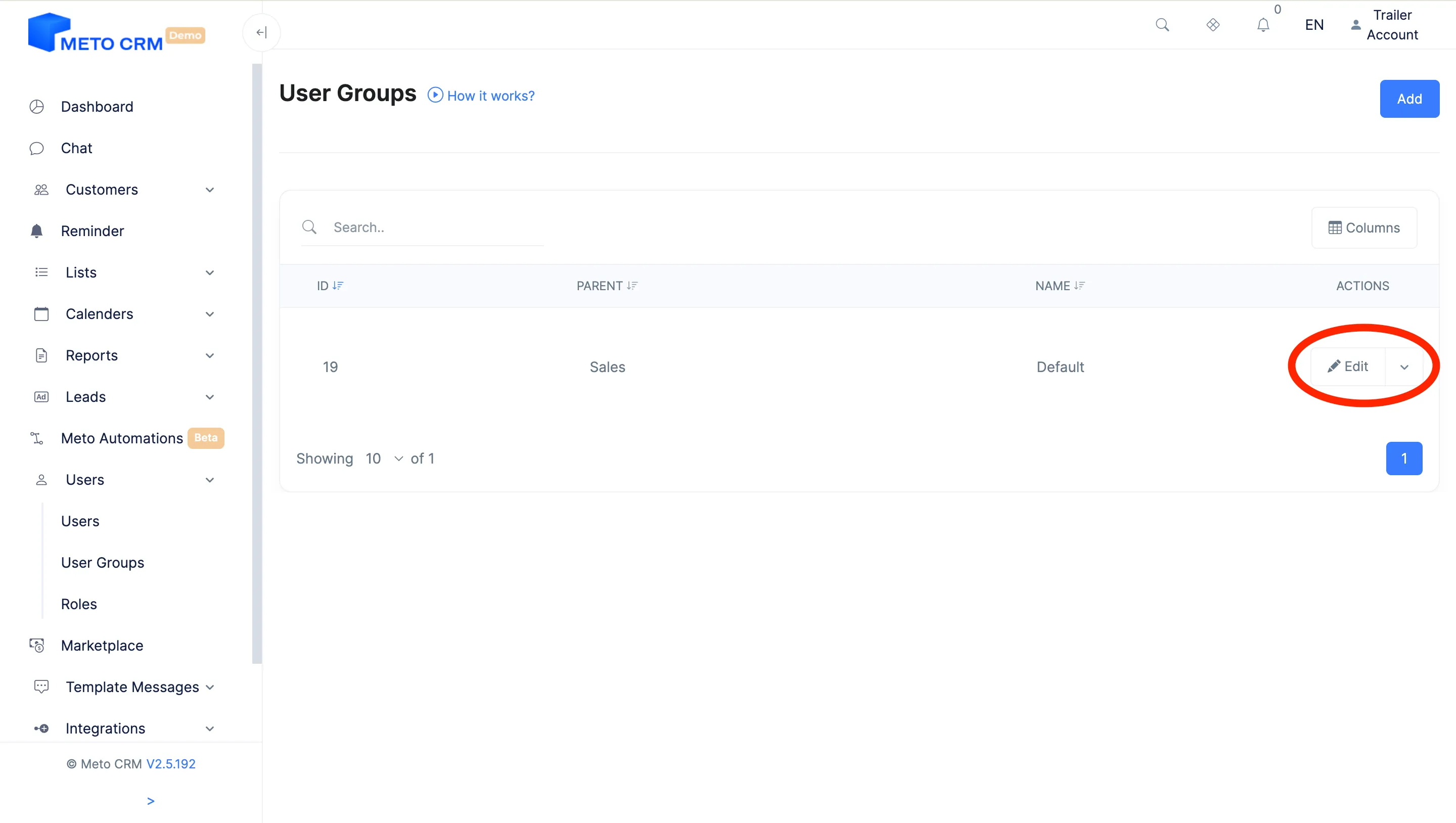
- Click the edit button for any changes to the User Group.
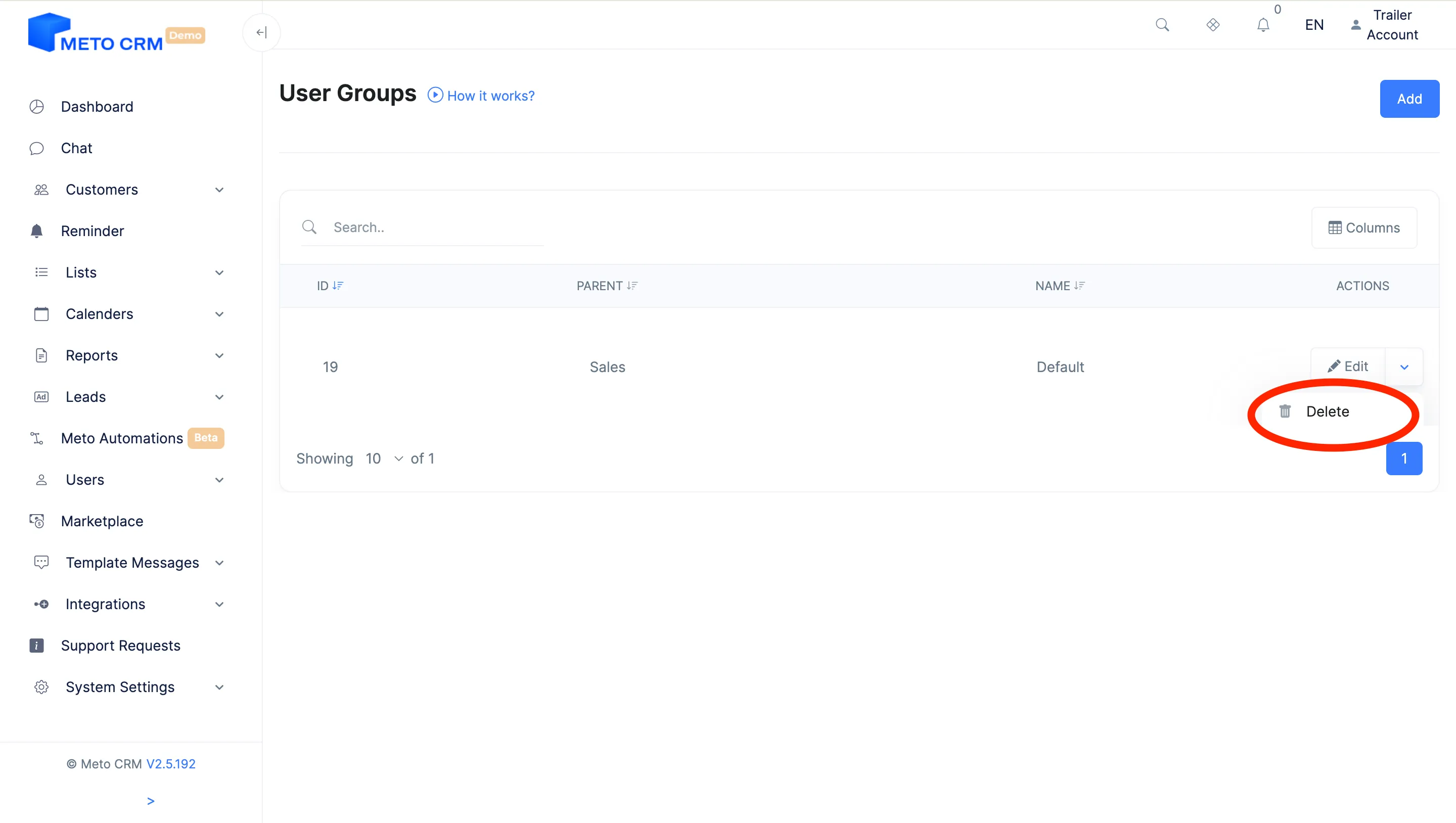
- If you want to delete the User Group, click the Delete button.
Tips and common mistakes
- Careful If you assign both a group and a person to a line, the person wins: the chat belongs to them directly and never enters the group pool. For team sharing, assign no individual to the line.
- Tip Review lead distribution after creating groups — distribution runs through them.
Frequently asked questions
Can a user belong to several groups?
Yes, and each membership is its own row. The same user can be a manager in one group and an ordinary member in another.
I created a group but members cannot see each other's patients.
That is expected. Membership does not open visibility; flag the person who should see everything as a group manager.
What happens to patients if I delete a group?
Patients are not deleted, but the group link is broken and any visibility that came through it goes with it. Move the patients to another group first.